Thursday, 27 April 2017

The Carneddau Ponies of Snowdonia.

If you're a regular reader of my blog, you will know that I love horses and I spend a lot of time in Wales. So when Jan Ruth, who writes rather lovely stories that can be both dark and humorous, sent me a piece about horses in Wales, I could hardly resist. Here it is.

The summit of Drum, a small peak nestled in the Carneddau range of Snowdonia, North Wales, can be an inhospitable, dangerous place. On day two of the annual pony-gathering a heavy shroud of fog obscured the dense landmass to within a few feet. Someone once said, ‘It’s the centuries of men’s hands on the stones that puts the heart into a place.’ The beating heart of the Carneddau for me, has to be the wild ponies, and they were the reason I found myself on top of a bleak mountain in the Welsh hills in November, 2014. The ponies of the Carneddau have access to some 27,000 acres, and there are less than 200 of them out there… somewhere. Ancestors would likely have used dogs and followed on horseback but sadly, modern times dictated the use of quad bikes and scramblers.

The rest of us walked, across a vast mattress of sodden heather. Within the hour though, the sun pierced through the fog and it dispersed like skeins of gossamer, revealing the full majesty of the Welsh hills and the Irish Sea. This dramatic landscape marches towards the foothills of Snowdon in one direction, and in the other falls in a crumpled stone-hewn scree to the west coast. It is both magical, and awe-inspiring. Add into this mix the sound of drumming hooves and you can feel the beating heart of this place match your own. Too whimsical? Probably, but the sight of these spirited ponies galloping across the heather, manes and tails flying; is a hugely emotional sight.


The romance and beauty of the Welsh hills is well documented, but some of the hill farmers are struggling to find definition in an increasingly faster, more cosmopolitan world. Despite this, there are 350 years of family history behind their passion for the hills, the ponies and their way of life. Scattered across these hillsides the remains of farming settlements, Roman forts and the slate industry epitomize the hardships, the triumphs and the disasters – but this history is part of our roots and part of what defines us. I love the honesty of this way of life, but like millions of other people feel powerless to nurture it when something fails to protect those issues which are out of our control. In the past – and we have to acknowledge our farmers have been through desperate times – the ponies have been collected off the mountain and herded into meat wagons.

Now though, I read somewhere that these ponies fetch less than a fiver at market. If something doesn’t bring financial reward, the worth of it is compromised – which is perhaps a sign of our times. And it’s disappointing that there’s a red tape fight over DNA proof to achieve rare-breed status – and therefore some protection – for this unique bloodline of Welsh Mountain ponies, a pure line which is specific to the Carneddau. I feel justified to feel both whimsical and passionate about the ponies' fate and concerned for the welfare of these animals, left to survive on their own wits through sometimes intolerable winter conditions. And although it is this very hardiness which makes them what they are, I do find it sad that the larger welfare and equine bodies don’t recognise a need to support and sustain this breed by at least maintaining and documenting the bloodlines.


For the uninformed, the native Welsh Mountain pony is a larger, more elegant version of the Shetland. The Shetland was epitomized by Thelwell – short legs, profuse mane and tail and as stubborn as they were fiery, depending on mood and opportunity. The seven Mountain and Moorland ponies of Great Britain were considered to be the hardy ground stock of children’s riding ponies the world over and crossed with larger, finer breeds to produce, well, anything you wished for. Emotional bonds have a value of their own which is difficult to define. I’ve been around horses for 50 years – although, coming from a working-class background where money was tight, I wasn’t born into a situation which easily accommodated them. Every Saturday, I would cycle fifteen miles with my father to have a riding lesson on a Welsh Mountain pony called Merrylegs. In the early sixties we were taught to stay on by clamping a threepenny-bit between our knees and the saddle. If it was still there after an hour, we got to keep it. Thankfully, gripping-on is no longer considered good practice! Ironic too, that the three-penny bit is extinct.

As a child around ponies, I learnt how everything was connected by a purpose and why even small things should be respected, because there’s a reason they are there. (Sharing this landscape with several thousand head of sheep impacts on the benefits of cross-grazing, the ponies eat the vegetation the sheep won’t and vice-versa, the parasites which develop in sheep are inhibited by the ponies and vice-versa.) I learnt how to give and take, I learnt that physical knocks or disabilities were not a barrier to success. My friend at the time – at age ten – had one-and-a-bit-arms. One side of the reins would be up round an amputated stump, but she was a more effective rider than I!

I learnt respect and humility, and all those invisible things we maybe cannot quantify or explain, but we know are there. But above all, I learnt to love the hills.

About Jan Ruth


The real story began at school, with prizes for short stories and poetry. She failed all things mathematical and scientific, and to this day struggles to make sense of anything numerical.

Her first novel - written in 1986 - attracted the attention of an agent who was trying to set up her own company, Love Stories Ltd. It was a project aiming to champion those books of substance which contained a romantic element but were perhaps directed towards the more mature reader and consistently fell through the net in traditional publishing. Sadly, the project failed to get the right financial backing.

Many years later Jan's second novel, Wild Water, was taken on by Jane Judd, literary agent. Judd was a huge inspiration, but the book failed to find the right niche with a publisher. It didn't fall into a specific category and, narrated mostly from the male viewpoint, it was considered out of genre for most publishers and too much of a risk.

Amazon changed the face of the industry with the advent of self-publishing; opening up the market for readers to decide the fate of those previously spurned novels. Jan went on to successfully publish several works of fiction and short story collections and after a brief partnership with Accent Press in 2015, has returned to the freedom of independent publishing.


Friday, 21 April 2017

Rebels and Redlegs

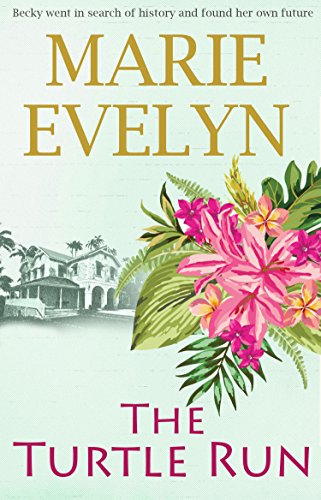
Marie Evelyn is a fellow Accent-author. Her book, 'The Turtle Run' is not a historical novel exactly, but it is a story rooted in history - and a part of English history that still has a surprising effect on the West Indies. She is my guest this week to write about the West Country in 1685 and the Barbados today. It's a fascinating story and I hope you enjoy it.


My mother (Margot Gameson née Evelyn) was born in the West Indies, one of many descendants of  a cousin of John Evelyn (the diarist), who went to Barbados in the C17th century.

The inspiration behind The Turtle Run, (and a scene in the book, described just as my mother witnessed it) came from an experience she had whilst driving in Barbados: she came across barefooted, blue-eyed, fair-haired children struggling to carry buckets of water from a standpipe to their chattel house whilst their mother hollered at them; it made an impression on my mother firstly because they looked so miserable, and secondly because it was the first time she had come across ‘poor whites’ – a phrase that carried much more shame in Barbados then than we can imagine from our current UK perspective. It was only later that my mother learnt that these were Redlegs – possibly descendants of the Monmouth rebels, who were exiled from England to Barbados in 1685.


Barbados: not just a holiday destination


My mother did a little research out there to try and discover more about the original exiled Monmouth Rebels but it was only many years later – after we had moved to the UK and my parents had retired to Dorset – that she was really able to research the beginning of the story, with its many connections to the West Country. 
  
When Charles II died there was such horror about the return of a Catholic regent (as his younger brother, James II, was), that many people preferred Charles’s illegitimate (but Protestant) son – the Duke of Monmouth – as king. This culminated in the Battle of Sedgemoor in Somerset in 1685 – the last pitched battle on English soil. The Monmouth rebels lost to the royal army, and great efforts were made to hunt down the men who had participated in the rebellion.

Of the judges appointed by King James II to dispense rapid  'justice', the most notorious was Judge Jeffreys. Much has been recorded about his bullying of defendants, (some of whom had not even participated in the rebellion), and his relish at announcing barbarous punishments. His cruelty is best demonstrated by his sentencing of one woman in her eighties, for giving a night's lodging to a man she hadn't even known was a Monmouth rebel: she was to be burnt alive. (Following protests, James II commuted this to 'beheading').

I have read that Jeffrey was quite dismayed that some of the convicted were to face the softer option of transportation to the colonies rather than execution, but this was down to expediency rather than royal mercy: James II rewarded some courtiers with rebels to work on their plantations as indentured labourers, whilst others were able to purchase rebel workers, to the financial benefit of the Crown. Ships left Weymouth and Bristol with the transportees below deck – so crammed that they could not lie down without lying on someone else. The diseases and infections (from wounds still unhealed following the Battle of Sedgemoor) which had characterised the stay of many in Somerset and Dorset jails, were carried forward into these holds, so that some died and had to be 'Buried At Sea' (tossed overboard).


Cane cutting 21st century style

The rebels who survived the sea journeys to the islands (such as Barbados, Jamaica, Nevis) were then worked into the ground: as their period of indenture was ten years, their masters had little incentive in ensuring their well-being beyond this term. The (now) politically incorrect name 'Redlegs' comes - predictably - from the observation that the white labourers could not adapt to working in the sun. In Barbados, the term ‘Redlegs’ includes the descendants of Scottish indentured labourers, the Irish exiled during the Cromwellian purges, as well as the English Monmouth rebels. In time, the plantation owners realised that black slaves were a better investment, and turned their attentions towards Africa. 

Following the Glorious Revolution (or the ‘Dutch Invasion’ if you prefer), when James II was deposed and replaced with his protestant daughter and son-in-law (Mary & William of Orange), a pardon was issued and in theory the exiles were free to come home. However, through a combination of the plantation owners' reluctance to release their workers, combined with the men simply having no money to pay the fare back, few if any rebels returned from Barbados to their homeland.


Although the 'Turtle Run' is contemporary, and has a strong romantic element, it has quite a historical feel as the protagonist (Becky) is tasked with researching the fate of the Monmouth Rebels in Barbados. A theme throughout the book is how people’s lives are influenced by the fate of their ancestors.

Who is Marie Evelyn?


Marie Evelyn are a mother and daughter team originally from the Caribbean but now based in the UK.

Mother Margot (Margot Gameson née Evelyn) has been published previously as Mary Evelyn and daughter Marie Gameson has a book  - The Giddy Career of Mr Gadd(deceased) - out in July.  The Turtle Run is their first novel together and is based on their first hand experiences of growing up in Barbados, showing a side of the island probably unknown to most visitors.

Marie Evelyn has a Facebook page at https://www.facebook.com/Marie-Evelyn-920546144697589/


Becky has lost her job and her direction in life so is thrilled when she gets the chance to go to Barbados and research the fate of the exiled Monmouth rebels. But the Caribbean paradise isn't all that it seems. The old plantation house is beautiful but lonely, and the locals are unhelpful. Becky senses that people know more than they are sharing. As her research becomes an obsession, one of the rebel descendants, who still works the same land as his ancestors, starts to relay messages from one of the original exiles. Is she living in a fantasy, or is this really an island of long memories? She soon finds that she is not the only one being led by the past.

You can buy 'The Turtle Run' on Amazon.

A word from our sponsor

I'm on holiday this week and very happy to have Marie Evelyn filling in for me. It's an interesting time to be away because while I'm not around to do anything about it, I've been confirmed as a speaker at the Thames Valley History Festival. I'll be at Waterstones in Windsor at 7.30 pm on Thursday 25 May when I will be talking about the real-life adventures of James Brooke, the hero of The White Rajah. I'll be mentioining this again over the coming month, but please put it in your diaries now. I do hope to see you there.

Friday, 14 April 2017

A free story for you

It's my birthday so I'm not writing a new blog today, but I am recycling one from back in the day when the blog reached fewer readers. Not many people saw this first time round and I think it deserves a better audience so here it is again: my birthday present to you.

Somebody set a challenge to tell a complete short story in 150 words. This was mine. Enjoy

Travels
I've always lived in the village, but my brother went for a soldier and fought in Boney's wars. He came back on leave and told me how he'd fought the French in India, where there were brown men who fought on elephants. And then he told me how he'd fought in Africa, where there were black men who fought with spears. Then he went to South America and fought the Spanish and stole their silver. But then he came back and fought the French up and down all the countries of Europe until they were caught at Waterloo, and then my brother came home.
"There's not a lot changed," he said.
"Not a lot," said I. "We drive the cattle for sale in Taunton now. We get a better price there."
"Taunton," he said. "I don't know I likes the sound of that. That's a terrible long way to travel."


If you want to give me a birthday present, I would really, really appreciate it if you bought one of my books. (Just click on the covers on the right to go to the Amazon page.)

Thank you.

Saturday, 8 April 2017

Friday, 31 March 2017

Nothing to see here ...

A couple of weeks ago was one of my casually rambling blogs. I try not to do those too often but I'm afraid that today has a certain rambling element to it as well. I do have an excuse, though, because this week I appear as a guest blogger for Karen King, writing about Argentina and the adventures I had researching Burke in the Land of Silver. Go and have a look!

I generally try to post on this blog once a week, but I am going to take a bit of a break from social media, including blogging. I'm not Steven Fry: I'm not storming off in a Twitter sulk, refusing to speak to any of you ever again. But there is a lot else going on in my life at the moment, so I'm going to row back a bit on Twitter, Facebook and this blog. Never fear: I'll still be posting occasionally and I have some exciting guest posters lined up to go some way to filling the gap my absence might leave in your lives, so please do check back here from time to time.

It will be interesting to see what happens to readership of this blog when I'm not writing about it on Twitter and Facebook. I know that a Facebook mention or a tweet does generate more hits on the blog. Relatively few of you 'follow' me on Blogger, which is understandable as following on Blogger only seems to make sense if you have a Google+ account and so few people have. Still, it makes me feel wanted and impresses publishers, so if any of you could, there is a 'Follow' button at the bottom of the right hand column. And if you could call by even if you don't see it mentioned on Twitter, that would be lovely.

To make up for taking a break from writing to you every week, I will be talking to anyone who wants to come and listen at Waterstones in Windsor on 25 May. Yes, I know that's a long way off, but I'm not going to be on social media plugging it for a few weeks, so here's the advance notice. I'll be talking about James Brooke, the hero of The White Rajah. There's no official publicity for it yet, but I've been assured it's really happening and it's at 7.30, so if you live near Windsor and are free that evening, it would be nice to see you.

OK, I'm starting as I mean to go on by keeping this post short. Normal service will be resumed eventually. Until then, enjoy the peace and quiet.

Friday, 24 March 2017

Random ramblings

Friday already and time for another blog post. I doubt that whatever I say is going to get as much attention as last week's on 'Historical Notes'. That was one of those that seemed to catch people's interest for some reason. It hardly "went viral" but it got far more views than most of my posts do. This week's post is, I think, going to be one of my occasional mild rambles.

It's odd what does and doesn't draw people in. I'm still trying to work out why a post on how we spent our Christmas holiday in 2013 is by now easily the most read item on my blog. I've asked if anyone knows why but no one seems to have any idea.

Claims or denials of expertise seem to be quite popular.  One of the most widely read posts here was by Kirsten McKenzie who wrote about how her experience in the antiques business provided her with the expertise she needed to write her historical/time slip novel, Fifteen Postcards. There was a lot of interest, too, in my own post about why, although I spend a lot of time researching my books, I don't feel I'm an expert at all. Two writers; two very different points of view – yet both pieces stand out for the number of people who read them. I think there's a lot of interest in what does or doesn't make an expert nowadays with books written  about the need for constant practice and motivational posters telling us that if we only work harder we can somehow excel in our chosen fields. As the person who wrote the piece denying my expertise, I'm a bit cynical about all this, but there's no doubt that the idea of immersing yourself in a subject and becoming a leading authority certainly fits with the zeitgeist whether you're Stephen Hawking writing about theoretical physics or Zoella, who is now a recognised authority on make up the teenage girls.

One thing I am definitely not an expert in is writing blog posts. Practised: yes.  I generally post about once a week  and nowadays I regularly get over 2,000 page views a month –  small beer by the standards of many of these things, but gratifying to me. I have been known to point out that if visitors to my blog bought 2,000 books a month that would do remarkable things my sales figures. If some of you would take the hint I'd appreciate that. What I write, though, attracts very different levels of interest week by week and when I post, I have very little idea what sort of response I'm going to get.

Of course it's gratifying to think that I'm reaching a lots of people through these posts but it's the responses that I really enjoy. Writing can be a very lonely business and it's always good to hear from people. Apparently there were technical issues with commenting on the blog, but I think these have been cleared up and anybody should now be able to type their response in the 'Comments' box below where everyone can see it. If you do  want to write to me but don't want to share your thoughts with the world you can reach me by e-mail at jamesburke.confidentialagent@gmail.com.

I wrote a few weeks ago about the excitement of getting my first payment for Public Lending Rights. Since then, my local library has added The White Rajah to the books that it has available for loan electronically. By now, I think, most London libraries have at least some of my stuff  available online. I do recommend this service. The book is downloaded to your phone or tablet (you may have to install some free software, but it is easy to use) and then you have all of the advantages of Kindle but without having to pay anything. And, unlike the case when my boys are pirated (and, sadly, they all too often are) I get paid every time you download it. If your local library doesn't have my books, could you ask them to make them available? There's usually an online form to do this and it does make a real difference to me.

Speaking of excitement: it seems that I'm going to be giving a talk on James Brooke, the eponymous White Rajah, at Waterstones in Windsor on 25 May. There is a date for your diaries. I'll be writing much more about this once it's all officially confirmed.

That's about it for this week. (I told you I wasn't an expert at writing blog posts.) I have noticed that posts with photos of Tango dancers tend to be well received so, before I go, here's a picture of my amazing tango teacher, Alexandra Ward, with her partner, Guillermo Torrens.

Original photo: Tom Mason

Alex is currently touring in Tangomotion. If you can't make Waterstones in Windsor, see if she's playing near you. It will be an evening with less history but more music. And she's certainly much prettier than I am

Friday, 10 March 2017

Tangling with tango

I have a guest on my blog this week: fellow Accent author Jennifer Macaire. Jennifer has been inspired by my posts about tango to tell us about her own experiences. Her husband was a professional polo player, so she had lots of opportunities to learn in Argentina. Unfortunately, she ended up in France with a less than satisfactory experience. 


Hello Tom! Thank you for having me as a guest on your blog. I saw you liked tango, and I admit, I love it too. Once, I even got the chance to learn with a professional.

When I was six, my parents enrolled me in the local ballet school. They were fans of Alvin Ailey and Twyla Tharp; the American dance theater had come to our town and we'd been entranced ... so off I went, my expectations soaring. Reality is cruel. I couldn't tell my left from my right. Even when watching the teacher I'd raise the wrong arm, put the wrong foot forward, trip, and generally bumble about. When the time came for the annual show, we students lined up to get our tutus. My name was called. I dashed forward. Scarlet! - I wanted deep ruby red with a sparkle of sequins on the bodice. My heart pounded. My ballet teacher handed me a gray-green package. Surely there was a mistake? I tore it open. No. It was verdigris. I choked back tears and stumbled off to put it on. The show must go on. In the audience, my parents who had gotten there early, sat in the front row and craned their necks. Where was I? I was hidden behind the curtain in the far back. I could see the teacher, I could see the students, performing our pliés, jétés, and whateverétés - I could not see the audience from where I stood, and no one could see me. The teacher smiled happily. The ugly duckling was not going to ruin her show. After, my furious parents pulled me out of the school and I never attempted ballet again. But many, many years later, an Argentine neighbor organized a two-day tango class in our humble village.

Dancing the dream: Buenos Aires

I signed up. I'd been to Argentina several times, spent my honeymoon there, and had watched people dancing tango. It looked so mysterious and gliding, sexy and daring. Women were invited to wear high heels and skirts. I happily dressed and went to the town banquet hall, where twenty villagers stood in various postures of shyness. I joined the line and we were introduced to the teacher - a daunting elderly man with a military bearing and piercing dark eyes. He lined us up, showed us how to walk dragging our toes, turn, fling our legs out, and turn again. You can tell already, by my vocabulary, that I was not the best student. He paired us up, and the music started. basic steps at first, then twirls and whirls. He tapped me on the shoulder."No. Like this. Come here." He took my hand, placed my other hand on his shoulder, and we started to dance. After about two minutes he stopped. "You must learn submission. I am the man. I lead." We tried again. I let my body go all loose, tried to imagine my arms and legs were tied to his, and I couldn't move without following. I stepped on his foot. He stopped."Hopeless," he stated. "Next!" I moved to the back of the line. My tango days were over. I watched until the end. The next day, there was a show with professional dancers, and some of the more talented villagers. I applauded, and ate alfajores. There are some who are born to dance - and there is me. But tango bug stayed with me. I love the music, and I love watching it.

The nice thing about being a writer is having imagination and being able to write about doing something impossible. So, without further ado - I present Jennifer Macaire - tangoist exceptionnelle! The basic tango walk is 2 slow beats, two quick beats, and a slow beat. The quick beats are 1 beat of music. Slow, Slow, Quick, Quick, Slow. Three full walks forward, followed by a side step and lastly a drag step. I'm wearing high heels and a scarlet dress with sequins. My hair is pulled back in a chignon, and there is a red rose in it. I have ruby lipstick. In the crowd, Robert Downey Jr is watching and thinking he's going to ask me to star with him in his next film about a modern woman who is sent back in time to the early 1900's in Paris to spy on the Nazis - she's a dancer at a nightclub, and her name is Mata Hari...as you can tell, I love time slip books!


 Alas! Jennifer’s experience is all too common, which is a shame, though it makes an excellent story. There are some terrible tango teachers around, but there are many very good ones as well. If you are interested in learning the dance, I can recommend teachers in London (and Berlin, Reykjavik, and Istanbul, for that matter). I’ve even been known to teach beginners myself. If you want advice on starting tango, feel free to email me on jamesburke.confidentialagent@gmail.com

Jennifer blogs at https://jennifermacaire.wordpress.com. Her book, The Road to Alexander, is the first in a series of time-slip books. The second will be published by Accent this summer.


About the book: After winning a prestigious award, Ashley is chosen to travel through time and interview a historical figure. Choosing her childhood hero Alexander the Great, she is sent back in time for less than a day. He mistakes her for Persephone, goddess of the dead, and kidnaps her, stranding her in his own time. What follows, after she awakes under the pomegranate tree, is a hilarious, mind-bending tale of a modern woman immersed in the ancient throes of sex, love, quite a bit of vino, war, death and ever so much more.